

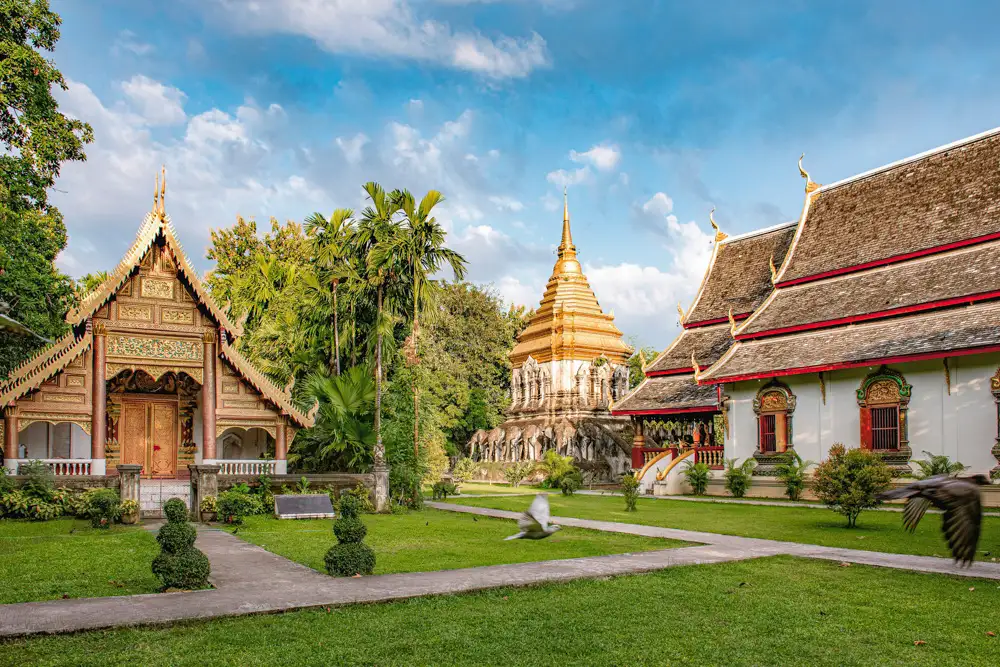
When Forbes published its 2026 ranking of the world’s premier destinations for remote professionals, the inclusion of Chiang Mai alongside Medellín, Cape Town, Lisbon, Bali, Mexico City, Tokyo, and Berlin might have read, a few years ago, as a familiar story about cheap living and good weather. It is no longer that story. The northern Thai city’s recognition is better understood as a marker of how profoundly the calculus of location-independent work has changed—and of how cities themselves have begun competing for a new and increasingly discerning class of mobile professional.
From Backpacker to Entrepreneur
The central insight of the Forbes assessment is not where the digital nomad goes, but who the digital nomad has become. The archetype that defined the movement in its first decade—the laptop worker chasing low rents and beachfront cafés—has matured into something more deliberate. Forbes describes the emergent profile as the “digital entrepreneur”: a remote worker whose location decisions hinge less on affordability and climate than on whether a city offers a functioning ecosystem for building a business, generating income, and meeting the right people.
This is a meaningful reframing. The early nomad economy was fundamentally extractive in its logic; workers earned in strong currencies and spent in weak ones, treating destinations as backdrops rather than as places to invest in. The newer cohort treats a city as a platform. They want reliable connectivity and co-working space, certainly, but they also want proximity to other founders, access to clients and collaborators, and the institutional texture that lets a one-person operation scale into something larger. Cost still matters, but it has slipped from the top of the list to somewhere in the middle.
Chiang Mai’s appeal under this rubric rests on infrastructure rather than novelty. The city earned its place on the strength of a mature co-working scene, an entrenched café culture that has long functioned as informal office space, and the everyday amenities that make sustained, productive work feasible rather than merely pleasant. These are unglamorous virtues, and that is precisely the point. The destinations winning this competition are the ones that have stopped selling escape and started selling capacity.
A City With a Strategy
What distinguishes Chiang Mai’s moment from a simple accolade is that the recognition arrives in the middle of a coordinated municipal strategy rather than ahead of one. Local authorities have been positioning the city as a hub for Meetings, Incentives, Conferences, and Exhibitions—the MICE sector—and the Forbes ranking has been received as external validation of a direction already chosen. The MICE City Summit held in 2026 has given way to preparations for a 2027 edition, and the influx of remote entrepreneurs is being folded into that larger ambition rather than treated as an end in itself.
The organizing concept is what the city calls its Creative Capital: the idea that cultural identity and creative industry can serve as primary economic engines rather than ornamental ones. The strategy rests on three pillars that reinforce one another. The first is to establish Chiang Mai as a destination for international conferences in technology and the creative industries, drawing the kind of high-value professional traffic that conventional tourism does not. The second is the cultivation of a “festival economy” that fuses the region’s Lanna cultural heritage and soft power with digital innovation, turning heritage into a recurring draw rather than a static attraction. The third is the development of the city into a Global Association Hub capable of hosting the international professional and academic organizations whose conferences and secretariats confer prestige and durable economic activity.
What makes this approach noteworthy is its attempt to convert a footloose population into rooted institutional value. Digital nomads are, by definition, transient; conferences, associations, and festivals are recurring. By building the latter on the foundation of the former, Chiang Mai is wagering that it can capture not just the spending of mobile workers but the gravitational pull they exert on networks, events, and organizations.
What This Means for the Competition Among Cities
The broader significance of Chiang Mai’s ascent lies in what it reveals about an intensifying contest. As remote work has normalized in the years since the pandemic permanently loosened the tie between employment and location, cities have awakened to the fact that mobile talent is a resource to be courted rather than a curiosity to be tolerated. The destinations on the Forbes list span continents and price points, but they share a recognition that attracting remote professionals now requires more than visa flexibility and good coffee. It requires the deliberate construction of an ecosystem.
This shifts the burden onto policy and planning. A city cannot conjure a co-working scene, a creative-industry cluster, or an association hub overnight; these are the products of sustained investment and clear strategic intent. The places that win, the trajectory of Chiang Mai suggests, will be those that treat remote workers not as tourists who stay longer but as a population to be integrated into a coherent economic vision. The risk, as ever, is that success invites the familiar pressures—rising costs, strained infrastructure, and tension with local residents—that can erode the very livability that drew people in the first place.
For now, Chiang Mai stands as a case study in getting ahead of the curve. Its recognition is less a reward for being cheap and charming than an endorsement of a thesis: that the future of remote work belongs to the cities ambitious enough to build for it, and patient enough to turn a transient crowd into a lasting institution.