

The Oil Shock Could Make Remote Work Permanent in Asia
Governments across Asia are mandating flexible work to survive an energy crisis.
For years, the argument for remote work rested on productivity studies, talent retention data, and employee wellbeing surveys. Then a pandemic made the case more forcefully than any whitepaper ever could. Now, a war in the Middle East is making it again — this time through the bluntest possible mechanism: the price of getting to the office has simply become too high.
As oil prices surge past $100 a barrel following US and Israeli airstrikes on Iran, governments across Asia are reviving the remote work policies of the COVID era — not as a workplace perk or a recruitment tool, but as a matter of economic survival. For anyone who has spent the last few years arguing that flexible work is the future of how we work, the moment is both vindicating and instructive.
A Crisis Is Doing What Corporate Memos Could Not
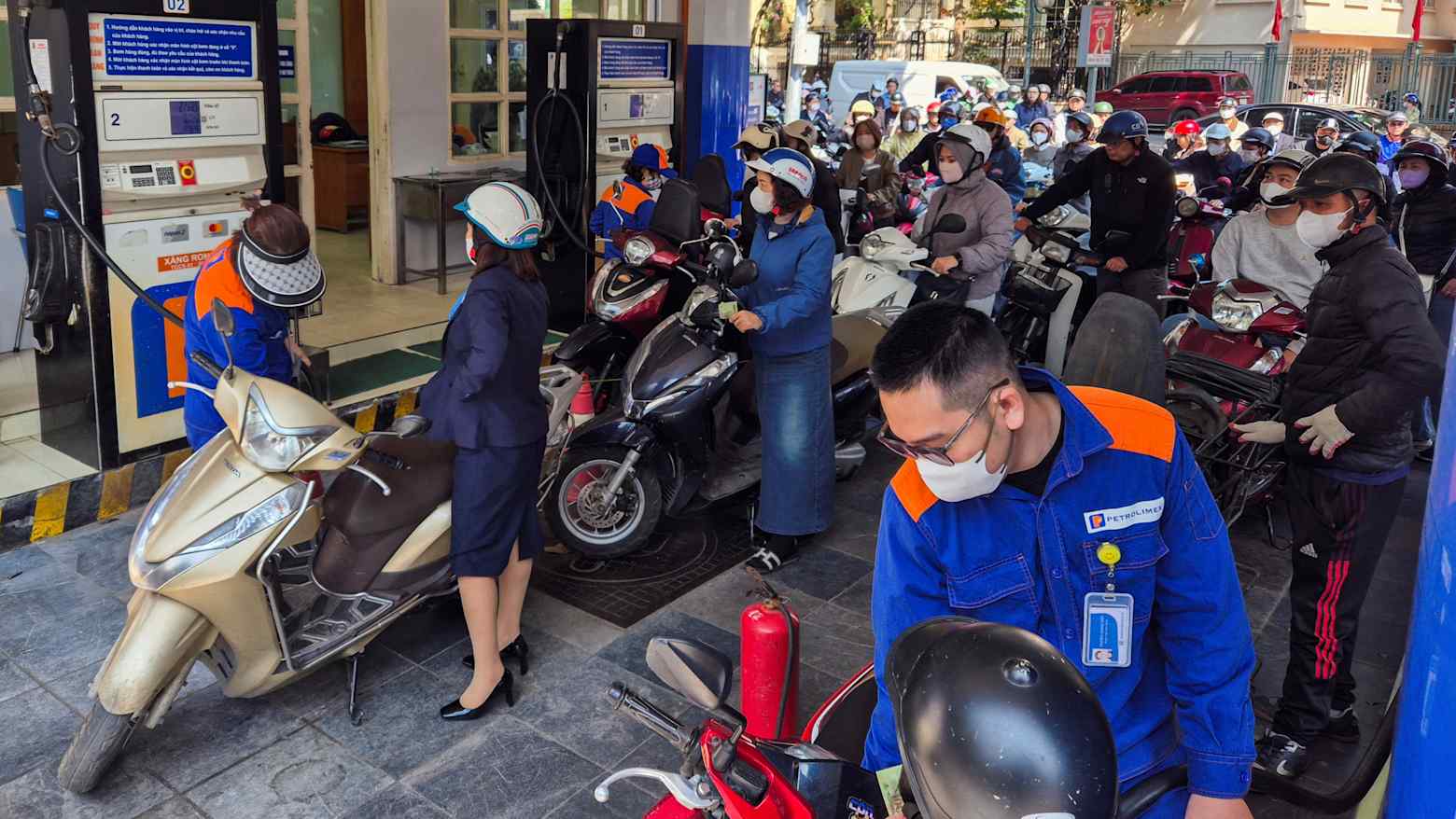
Indonesia, Vietnam, Thailand, the Philippines, and Pakistan have each rolled out some form of work-from-home directive or flexible working arrangement in recent weeks. The speed and breadth of the response is remarkable. Indonesia is actively considering hybrid work models and online schooling to cut fuel consumption, with officials citing potential reductions in fuel use of up to 20 percent from commuting cuts alone. Vietnam’s Trade Ministry has formally urged businesses to encourage remote work after sharp fuel price spikes triggered long queues at petrol stations. Thailand has shifted parts of its public sector to remote operations. The Philippines introduced a four-day office week for some government staff — and then escalated further, with President Ferdinand Marcos Jr. declaring a national energy emergency. Pakistan has gone furthest of all, combining partial remote work for public employees with reduced fuel allowances and temporary school closures.
The common thread running through all of these responses is one that remote work advocates have been making for years: when people do not commute, they use significantly less energy. Road transport accounts for roughly 45 percent of global oil demand globally. Cut the commute, and you cut consumption in a meaningful, measurable way. Governments under pressure have done the maths, and the answer points directly to the home office.
The Commute Has Always Been the Problem
There is something clarifying about watching a geopolitical crisis strip away the cultural arguments around office attendance and reduce the conversation to simple arithmetic. The commute — long treated as an unremarkable fact of working life — is suddenly visible as what it has always been: a significant, largely unnecessary expenditure of time, money, and energy that benefits no one except the oil companies and commercial landlords.
Remote work advocates have made this point for years, usually to polite scepticism from executives who preferred to frame office presence as a matter of culture, collaboration, or accountability. The energy economics were always there in the background, waiting to be noticed. It took $100 oil and a closed shipping strait to make them impossible to ignore.
For workers who have been pushing for more flexibility, there is a certain irony in the fact that the breakthrough argument was not about work-life balance or neurodiversity or the cost of childcare. It was about barrels per day.
What History Tells Us About Emergency Flexibility
Here is the part that should interest anyone thinking about where remote work goes from here. The pandemic demonstrated, at global scale and across virtually every knowledge-work industry, that flexible and remote arrangements do not destroy productivity. That experiment settled a debate that had resisted resolution for decades. But what it also demonstrated was something subtler and more durable: once workers adjust their expectations around flexibility, those expectations do not simply reset when the emergency ends.
Hybrid work did not become the dominant arrangement in the post-pandemic professional economy because employers decided it was optimal. It became dominant because the adjustment in worker expectations proved impossible to fully reverse. Employees who had restructured their lives around the absence of a daily commute — reorganising childcare, relocating, taking on caring responsibilities, building routines — were not willing to simply abandon those adjustments because a CEO decided the office was open again.
The same dynamic is almost certainly going to reassert itself in the countries currently deploying emergency remote work measures. The four-day government week in the Philippines, the hybrid models being piloted in Indonesia, the work-from-home directives in Vietnam — these will leave traces. Workers will adapt their lives to the new rhythm. Some will discover they are more productive. Others will restructure domestic arrangements that depend on the flexibility. When the immediate crisis eases, the institutional pressure to reverse course entirely will collide with a workforce whose preferences and logistics have shifted, again.
For Remote-First Companies, This Is the Confirmation
If your organisation has already committed to remote-first or hybrid working, the current moment offers a useful reframe for internal conversations about why that commitment matters. Remote work is not simply a talent strategy or a culture choice. It is a structural resilience capability. When fuel prices spike, your workforce does not experience a commuting crisis. When energy costs pressure household budgets, your employees are not spending an additional ten to fifteen percent of their income getting to a building to sit on video calls they could have taken from home.
The Asia energy emergency is an extreme case, but it illustrates a principle that holds at lower intensities too. Organisations that are not dependent on daily physical attendance are insulated from a whole category of external shocks — fuel price volatility, transport disruptions, weather events, public health crises — that create friction and cost for location-dependent workplaces. Resilience, in 2026, looks a lot like a distributed team with a robust async culture and no mandatory parking lot.
The Argument Has Changed
What is most significant about this moment is not the specific policies being deployed, but the argument that is now being made on behalf of remote work at the highest levels of government. For years, the case for flexible working was made in the language of employee preference and talent competition. Then the pandemic reframed it in the language of public health necessity. Now, energy security and economic resilience are doing the same work.
Each reframing expands the coalition of people who have a stake in flexible work succeeding. When remote work is framed as an employee perk, it is easy for sceptical executives to dismiss it as a negotiating chip. When it is framed as a public health measure, governments and employers align around it under pressure but treat it as temporary. When it is framed as energy policy — as a structural response to the economics of fuel consumption and supply chain fragility — it becomes something harder to argue against and even harder to reverse.
The Next Chapter Is Being Written Now
The International Energy Agency, in its emergency response guidance, has called on governments to institutionalise remote work, reduce business air travel, and rethink the daily rhythms of economic life around lower energy consumption. This is the sixth time the IEA has coordinated emergency action on oil markets since 1974. Previous crises prompted adaptations that lingered long after the immediate pressure eased.
This one arrives with something those earlier crises lacked: the proven infrastructure to make flexible work function at scale. The collaboration tools, the management practices, the broadband penetration, the cultural familiarity — all of it exists now in a way it simply did not in 2005 or 2011. The conditions for making this shift permanent are more favourable than they have ever been.
The pandemic showed that remote work could work. The oil shock is showing that remote work is necessary. When something is both viable and necessary, it tends to stop being a debate and start being the default. We may be closer to that moment than most people in a corporate office are ready to admit.